Berlin Marathon 2026: Guide to the Course
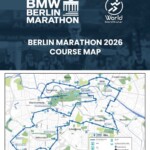
The Berlin Marathon is one of the most predictable and fastest road races in the world. The course is flat, wide and designed to support steady pacing from the first to the last kilometer. In 2026, more than 56,000 runners will line up at the start, each relying on the infrastructure that has defined Berlin for years: the blue line marking the official distance, clear kilometer markers and densely distributed refreshment points. This guide brings together the key elements of the course to help you plan your race with intention.
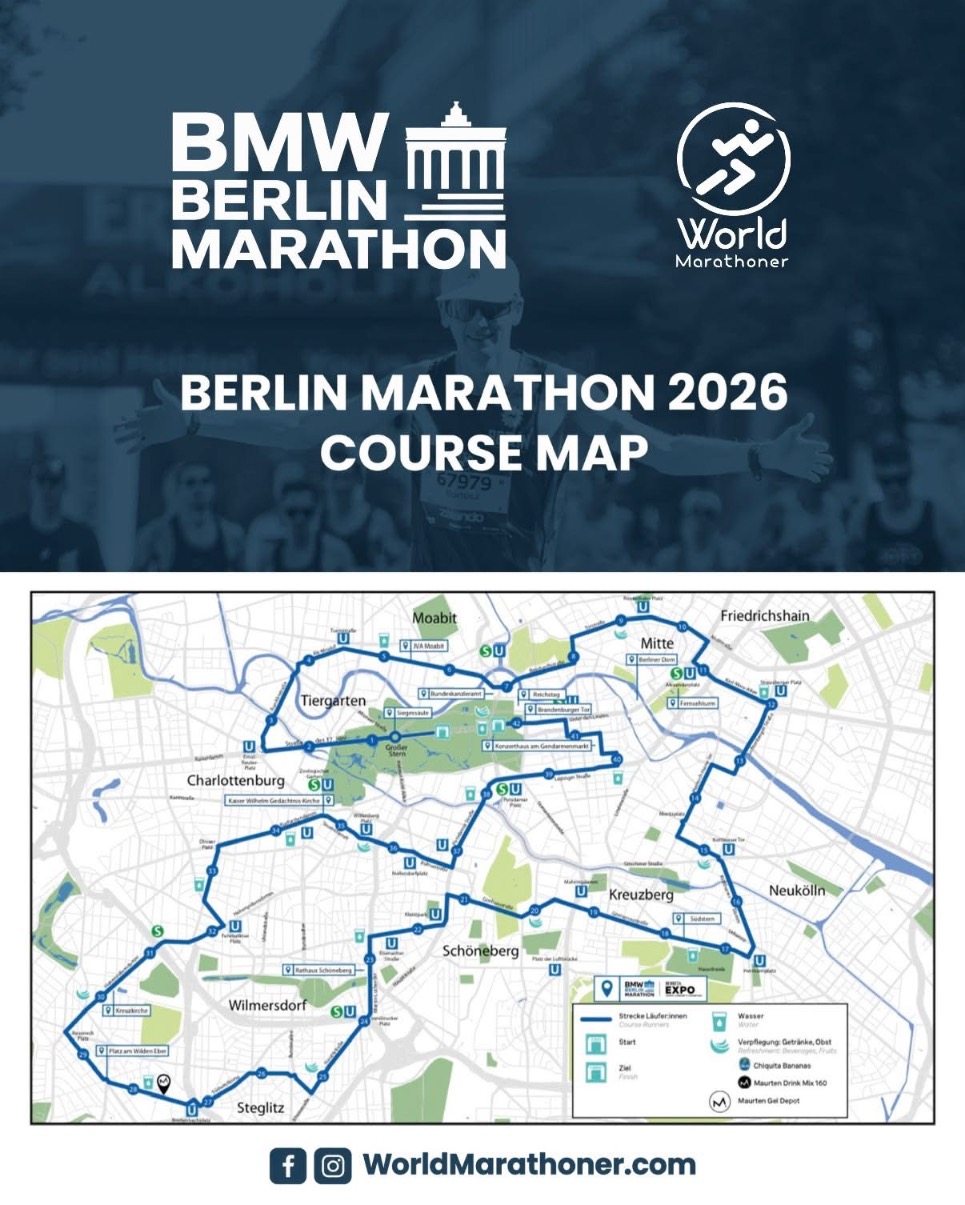
One of the most recognizable features of the Berlin course is the blue line painted on the asphalt. It marks the officially measured marathon distance — exactly 42.195 km, the shortest possible route from start to finish. In practice, staying close to this line wherever the flow of runners allows helps reduce the risk of running extra meters. On wide streets and gentle bends, the difference between running in the middle of the road and following the measurement line can add up to dozens of meters over the full distance. In Berlin, where many runners chase personal bests, that matters.
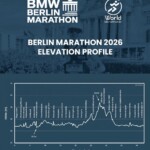
Another key element is the distance marking system. Berlin uses kilometers only — there are no mile markers anywhere on the course. Each kilometer is clearly marked and equipped with a clock, allowing you to check your pace without relying solely on your watch. If you think in miles, it’s worth preparing your own conversions in advance. More details are explained in the elevation profile analysis:
Berlin Marathon 2026 Elevation Profile
Along the course and at the finish, the organizer provides various drinks and quick energy sources at refreshment points. The system is designed so runners have regular access to water, isotonic drinks, tea, fruit and Maurten products. Water is available at: 5 km, 12 km, 17.5 km, 22.5 km, 27.5 km, 32.5 km, 34.5 km, 38 km and 40 km. This dense distribution allows you to adjust hydration to weather conditions and personal needs without carrying large amounts of fluid.
Selected refreshment points also offer isotonic drinks and additional energy sources. Water, fruit, tea and Maurten DRINK MIX 160 are available at 9 km, 15 km, 20 km, 25 km, 30 km and 36 km. These stations allow you to replenish both fluids and carbohydrates using products designed for long‑duration effort. Additionally, Maurten Gel 100 is available at 27.5 km — a fast carbohydrate source useful when fatigue begins to build. All drinks are served in cups, making it easy to grab and drink while running.
The organizer also provides refill stations for runners using their own hydration systems. Soft flasks, bottles or reservoirs can be refilled at every refreshment point. Refill stations are located at the last water table — look for the “refill” sign. This is especially useful for runners who prefer constant access to fluids and do not want to rely solely on cups handed out on the course.
There is also an option to use your own nutrition delivered to specific refreshment points. On request, the organizer can transport individual drinks or gels to selected stations: 5 km, 9 km, 15 km, 20 km, 25 km, 30 km, 36 km and 40 km. The container (no glass) must be clearly labeled with your name, bib number and the chosen refreshment point. On race day, personal nutrition must be delivered to the “own refreshment” stand between 7:00 and 7:45 a.m. A dedicated truck is located outside the fenced area at Annemarie‑Renger‑Str. / Otto‑von‑Bismarck‑Allee, from where the items are distributed to the correct tables.
Planning how you use refreshment points helps organize your race strategy. You can decide in advance where you take only water, where you use isotonic drinks and where you introduce gels. Berlin offers flexibility — dense refreshment points, refill options and personal nutrition support allow you to match your plan to your pace and carbohydrate tolerance. With a solid fueling strategy, maintaining pace becomes easier because your body works in stable conditions throughout the marathon.
Below is a complete overview of the Berlin Marathon 2026 refreshment points — including kilometers, available drinks and additional items. It’s a practical summary you can use when planning splits, hydration strategy and carbohydrate intake. The table follows the World Marathoner color scheme.
| Kilometer | Available Drinks | Extras |
|---|---|---|
| 5 km | Water | Own refreshments (optional) |
| 9 km | Water, Maurten DRINK MIX 160 | Fruit, tea, own refreshments |
| 12 km | Water | – |
| 15 km | Water, Maurten DRINK MIX 160 | Fruit, tea, own refreshments |
| 17.5 km | Water | – |
| 20 km | Water, Maurten DRINK MIX 160 | Fruit, tea, own refreshments |
| 22.5 km | Water | – |
| 25 km | Water, Maurten DRINK MIX 160 | Fruit, tea, own refreshments |
| 27.5 km | Water | Maurten Gel 100 |
| 30 km | Water, Maurten DRINK MIX 160 | Fruit, tea, own refreshments |
| 32.5 km | Water | Hydration system refill |
| 34.5 km | Water | Hydration system refill |
| 36 km | Water, Maurten DRINK MIX 160 | Fruit, tea, own refreshments |
| 38 km | Water | Hydration system refill |
| 40 km | Water | Own refreshments |
In summary, Berlin’s refreshment points are dense and predictable, and the availability of refills and personal nutrition gives runners full control over hydration and energy. Combined with the blue line and clear kilometer markers, the course is easy to navigate even in a large crowd, helping maintain a steady rhythm from start to finish.
More About the Berlin Marathon
News, guides and analysis related to the Berlin Marathon.
Source: Berlin Marathon