
Table of Contents:
- Introduction
- What is an eSIM Card?
- How to Prepare for Using eSIM Before Traveling?
- My Experience with an eSIM Card in Japan
- Cost Comparison: eSIM vs. Roaming vs. Local SIM Cards
- Advantages and Disadvantages of Using eSIM
- FAQ – Frequently Asked Questions
- Summary and Recommendation
Introduction
Traveling to Japan is an exciting experience, especially for runners heading to the Tokyo Marathon. One of the key aspects of any international trip is internet access. Nowadays, we can use traditional SIM cards, expensive roaming services, or modern eSIM technology. On my last trip, I tested the Airalo eSIM card and want to share my impressions.
What is an eSIM Card?
eSIM is a virtual SIM card that works without the need for a physical plastic carrier. It allows you to switch between operators quickly and purchase data plans in any country without visiting a store. You just need to download the appropriate eSIM profile onto your phone, and you’re ready to go.
How to Prepare for Using eSIM Before Traveling?
1. Check Your Phone’s Compatibility
Not all smartphones support eSIM. It’s worth checking on your phone manufacturer’s website or with your service provider to see if your model is compatible.
2. Choose the Right Provider
There are many eSIM providers on the market, such as Airalo, Holafly, and Nomad. Each offers different data plans and pricing.
3. Install the App and Select a Plan
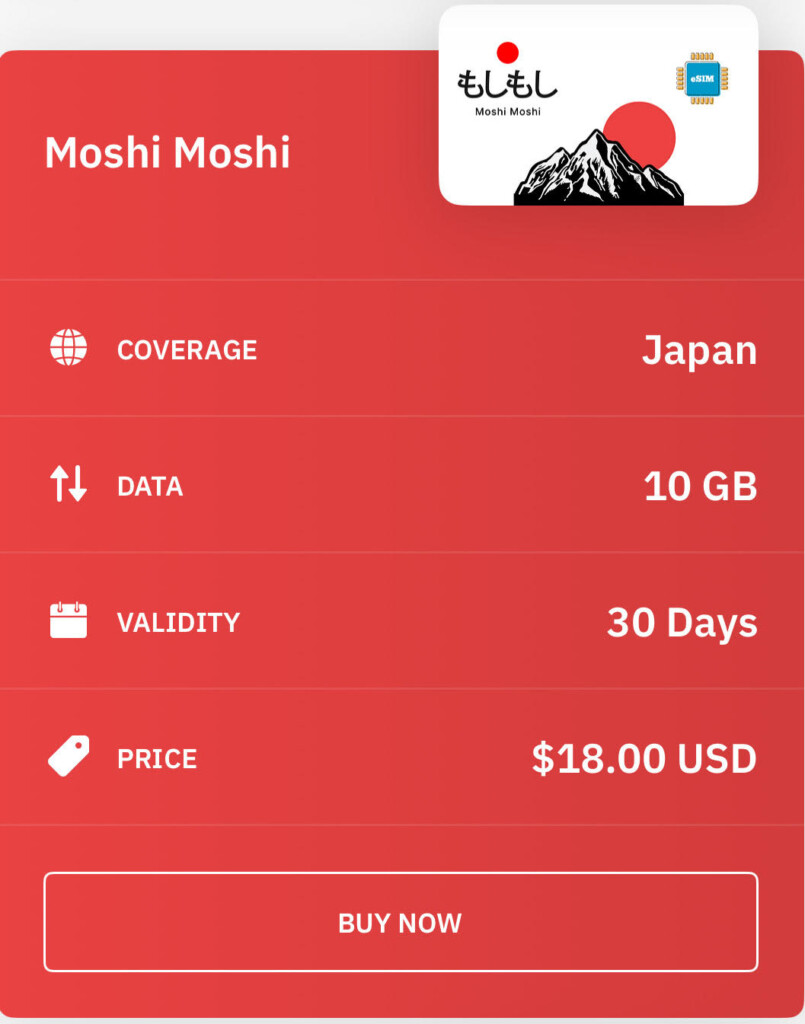
I chose Airalo because they had a promotion for 10 GB for $9 (normally $18). Installing the app and purchasing the plan took just a few minutes.
4. Activate Your eSIM Before Departure
To avoid any issues upon arrival, it’s best to activate your eSIM before you leave. In my case, the internet was available immediately after landing in Tokyo.
My Experience with an eSIM Card in Japan
The coverage and internet speed in Japan were excellent. Even in crowded Tokyo, I had no connection problems. I used maps, food delivery apps, and social media without any interruptions.
(Screenshot of the eSIM app in Japan)
Cost Comparison: eSIM vs. Roaming vs. Local SIM Cards
| Option | Cost | Convenience | Installation Speed |
|---|---|---|---|
| eSIM (Airalo) | $9-$18 for 10 GB | Very convenient | Instant |
| Roaming | Can cost even $50 for 1 GB | Expensive & limited | Automatic |
| Local SIM Card | Can cost even 20-$30 for 10 GB | Requires store visit | Physical setup |
Advantages and Disadvantages of Using eSIM
Advantages: ✅ No need to swap physical SIM cards
✅ Cheaper than roaming✅ Works immediately upon landing
✅ Convenience and flexibility
Disadvantages: ❌ Not all phones support eSIM
❌ Some eSIMs do not allow receiving phone calls
FAQ – Frequently Asked Questions
1. Does eSIM work on all phones?
No, it’s essential to check compatibility before purchasing.
2. How do I activate an eSIM card before traveling?
The best approach is to download the app, select a plan, and activate your eSIM before departure.
3. Can I use eSIM alongside a traditional SIM card?
Yes, many phones support both eSIM and a physical SIM card simultaneously.
Summary and Recommendation
Traveling to Japan with an eSIM card is a convenient and cost-effective solution for travelers and marathon runners. It allows you to focus on sightseeing and running without worrying about internet access.
Want to learn more about marathons worldwide? Check out my e-book: Your Guide to the World’s Largest Marathons.